Category: Cake Troubleshooting and Fixes

A cake that sinks, cracks, sticks or turns out dry is frustrating, but it is rarely a mystery once you know where to look. This part of baking science and troubleshooting is built for the moment something has gone wrong and you want a clear answer. Each article takes a single symptom and works through the usual suspects, starting with the most likely. We write for home bakers of every level, including people who have baked for years and still get surprised now and then.
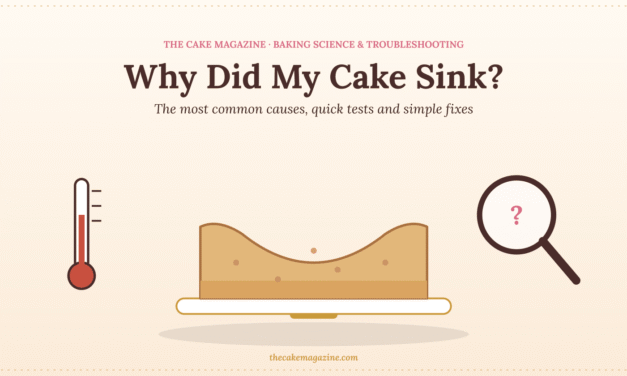
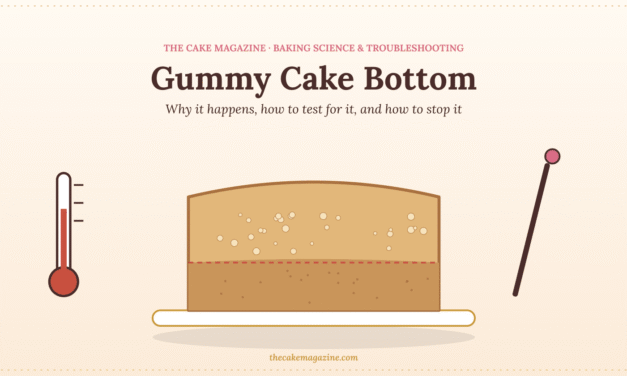
If the middle of your cake collapsed, start with why a cake sinks in the middle. If the crumb is parched, why a cake is dry looks at flour, oven heat, pan size, fat and baking time. For a heavy or tight texture, why a cake is dense covers mixing, leavening and ingredient temperature. A wet stripe at the base is explained in why a cake has a gummy layer.
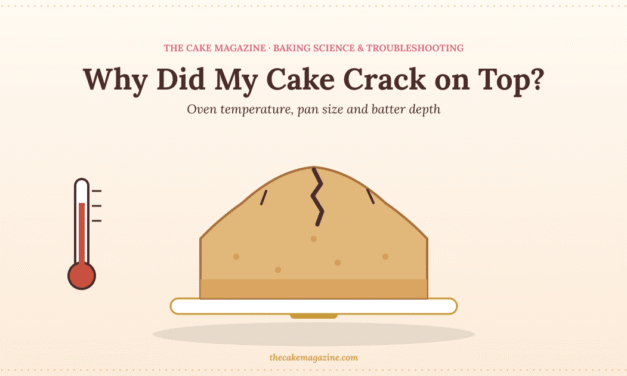
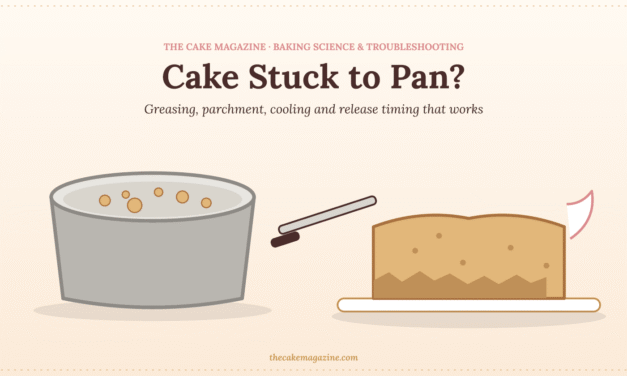
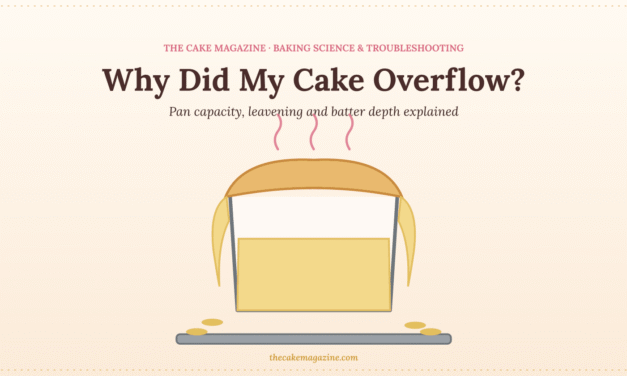
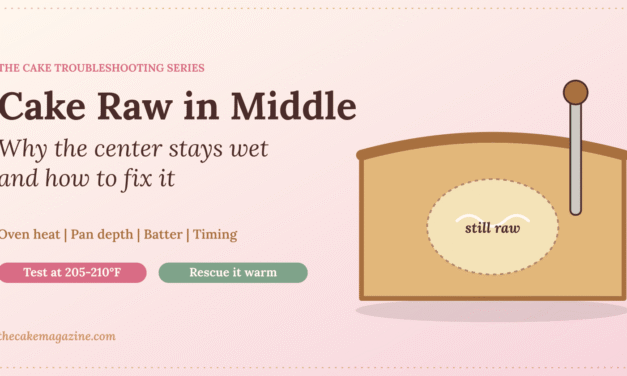
The library also covers shape and release problems such as domes, cracks, sticking and overflow, along with uneven baking, raw centers, crumbling, greasiness and tunnels. You will also find a guide on how to tell when a cake is done without overbaking it, which prevents several of these problems before they start. The causes overlap more than you might expect. Pan size, oven temperature and batter depth show up again and again, so reading two or three articles together often clears things up.
We try to be careful about certainty here. A symptom can have more than one cause, so we suggest changing one thing at a time and noting the result. If you want to understand the principles behind the fixes, cake science and mixing methods is a good companion section. Pick the symptom that matches your cake and start there.

Loading